
Orange trees originally come from China but have been grown in Europe and North America for over 100 years. Orange trees are now grown all over the world for their delicious and nutritious fruit. There are many varieties to choose from, including Jaffa oranges, Navel oranges and Blood oranges.
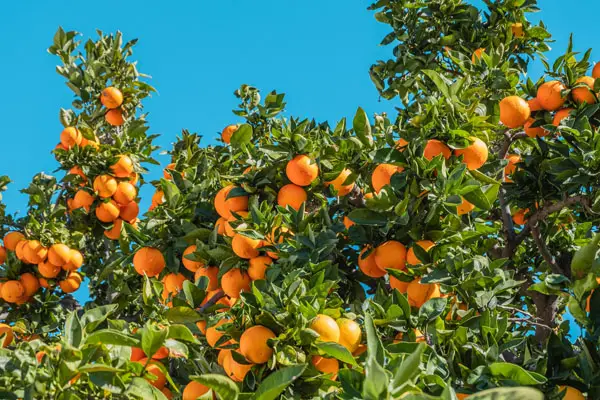
Many orange trees along with other citrus fruit such as lemon trees and lime trees can be grown in the UK, under cover such as in a conservatory or greenhouse. They are not hard trees to grow in the UK as long as they are looked after properly.
Jump To...
About Orange Trees
As is the case with other citrus plants, such as lemon trees and lime trees, orange trees are best grown in pots.
They need some extra protection during winter so having them in pots means you can move them when required. Orange trees are a delight to grow and you will enjoy dark green leaves all year round as they are an evergreen plant variety (they don’t lose their leaves in autumn). Flowers are of delicate appearance, white in colour, with a fragrant smell. Oranges have so many uses and can be used to make jams, marmalades, sauces, smoothies, fresh juice, and curd.
Growing Orange Trees
Orange trees cope well with the great British weather and are often grown more successfully than other citrus varieties. Carrying out regular annual tasks will ensure you get a good harvest and maintain the tree’s overall health.
Orange trees are best grown in a large pot full of rich, organic matter. They suit a well-lit position, free from draughts. For smaller trees, a windowsill is ideal. Larger plants will benefit from a humid greenhouse or conservatory environment. In the summer months, stand them in a dish of wet gravel or mist them with water every day to encourage humidity, and place them outside if it is warm enough – they love to be outside. A south facing patio against a wall is ideal.
Orange trees can tolerate temperatures as low as 4°C, so if you live in the south you may be able to keep them outside throughout the year. Cover them with thick layer of fleece, so any frost can’t get to them. During the summer months water them weekly, ideally with rainwater, and fertilise with a specialist citrus plant food or liquid seaweed.
Tips for Growing Orange Trees:
- If kept indoors throughout the year, remove dust from their leaves regularly, so the plant can breathe.
- Ensure temperatures in your conservatory or greenhouse don’t get too high.
- Keep your orange tree away from radiators as they can put the trees under stress.
- Keep them cool, but protected from frost during winter – this mimics their natural growing conditions.
- Water less during winter but don’t let the pot dry out completely, and increase the amount in spring.
- Check the soil before you water the tree – too much water can kill them.
- Feed weekly during the summer with a special citrus tree fertiliser – this gives them all he nutrients they are used to absorbing in their natural conditions. An organic alternative is a seaweed solution.
- Top up the soil in the pot every spring with fresh compost.
- Prune branches to 10-15cm long in February to keep the tree compact and healthy.
Best Orange Varieties for the UK
Many orange varieties can be successfully grown and fruited in the UK climate. Oranges are a surprisingly hardly plant, and can cope with temperatures as low as 4c. Many robust orange hybrid varieties are being developed meaning the orange has a promising future in UK gardens.
Here’s our top 3 picks for the best oranges to grow in the UK climate! The below guide features links to our online shopping resource. We have carefully curated fruit trees for sale from top UK merchants.
Seville Oranges
Best For: Easiest Orange Plant To Grow in the UK
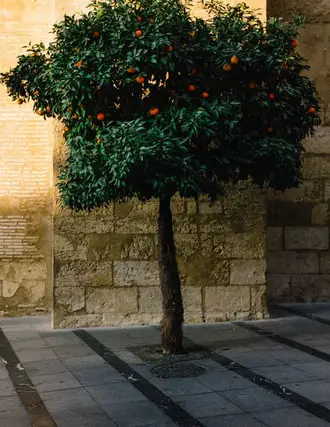
The Seville Orange (Citrus × aurantium) can tolerate a minimum temperature range of 3-5c meaning it can be grown outside in warmer areas of the UK. Seville oranges are a bitter orange variety, meaning most gardeners will use its fruit for producing marmalade. Commercially it is also used in the production of essential oils.
In the UK, it needs a full sun position in well drained soil if grown outdoors. In a greenhouse or conservatory use a loam based potting compost.
- Best Feature: Easiest to grow in the UK.
- When To Plant Out: Spring.
- Harvest Fruit: November – March.
- Best Growing Position: Full sun, avoid frost.
- Use For: Jams & Marmalades.
Navelina Orange Trees
Best For: Easy Care Eating Orange
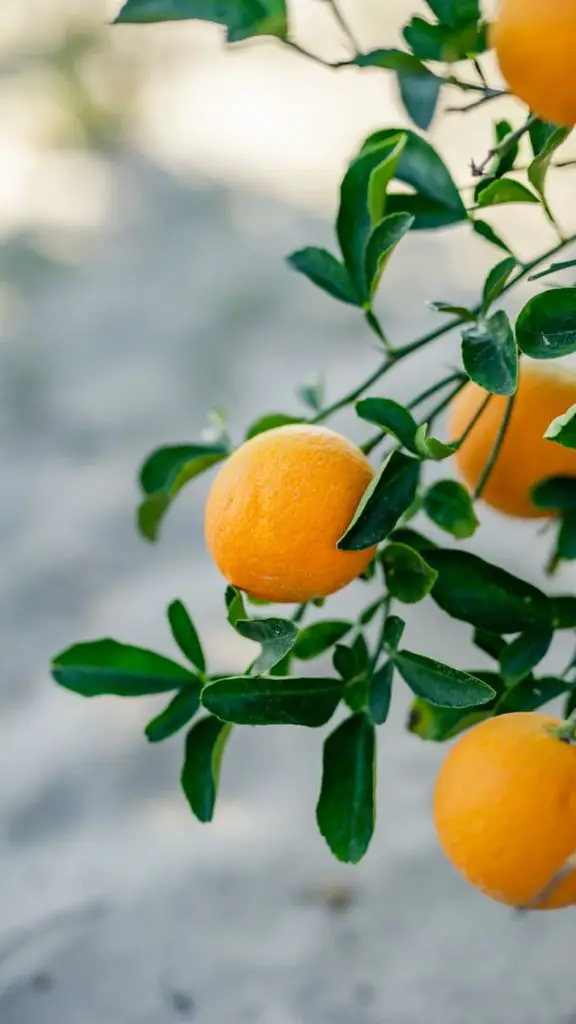
Another firm favourite with UK citrus fruit gardeners is the Navelina Orange. This popular orange variety is a type of navel orange. It produces full sized oranges on a semi dwarf tree, making it a great plant for greenhouses or conservatories. It is easy to care for, and will produce fruit after around 12 months.
If you’d like to try to grow your own eating oranges at home, this is a great tree to experiment with. It will not enjoy centrally heated environments, so in winter it’s best stored in a conservatory or greenhouse.
- Best Feature: Full size eating orange on small tree.
- When To Plant Out: April to August.
- Harvest Fruit: November to March.
- Best Growing Position: Full sun, avoid frost. Dislikes central heating.
- Use For: Eating fresh.
Blood Orange Trees
Best For: Gardeners who like more of a challenge.

Blood orange trees produce deliciously sweet fruit with ruby red flesh. You’ll need to pay a little more care and attention to successfuly grow fruit with the trademark red flesh, but it’s very worthwhile.
The distinctive red colour is produced by temperature differences, meaning you may need to move the plant between patio and a warm spot indoors. The effort is well worth it however, the satisfaction of growing such an exotic fruit at home will be immense.
- Best Feature: Exotic bright red flesh.
- When To Plant Out: April to August.
- Harvest Fruit: November to March.
- Best Growing Position: Full sun, bring inside in frost.
- Use For: Eating fresh.
When To Plant Orange Trees
You can plant your orange tree in a pot any time of year as long as you protect it during the winter by bringing it indoors or into a heated greenhouse. From June to September, you can pop it outside to soak up some sun.
Where To Plant Orange Trees
Orange trees are best grown as potted plants so you can move them around during the growing season. Indoors you can put your orange tree anywhere where it isn’t dark or in front of central heating. Oranges like airy conditions and small potted trees will grow well in sunny windowsills or conservatories. Outdoors, somewhere sheltered yet sunny will be ideal so they can enjoy the warm sunshine and be protected from any winds. If you have a sunny south facing patio in a sheltered spot, your orange tree should grow very well. We would recommend placing the orange tree in a corner close to a wall for optimally warm conditions.
How To Prune Orange Trees
Grafted orange trees are slow-growing so pruning will be minimal. This is good news if you are new to the world of gardening. It’s best to wear some gloves while pruning as there will be sharp thorns on your tree. In winter when your tree is indoors, you can get rid of branches that crossover on each other. You can also remove any that are diseased or unhealthy looking. In the summer when your tree is outdoors you can pinch back the stems of your flowers which will encourage healthy growth.
Growing Oranges in Pots
When your orange tree is about 12 months old you should start to consider moving it to a larger pot. After this, every 2-3 years it will need repotting as it matures. Drainage holes are important when choosing your pot as they won’t fare well in wet, undrained soil. One reason for repotting is so you can add new soil which will be full of rich nutrients.
Orange Tree Facts
- The average height of a potted orange tree will be around 6ft.
- Flowering can potentially occur all year round, and you will be treated to gorgeous fruit which can take up to 12 months to ripen.
- Once they are ripe, they can be eaten straight from the tree, or left on the branch until you’re ready to eat them. They retain their flavour this way, if you plucked them from the tree and stored them, their flavour would diminish.
- If your space is modest you can buy a mini variety of orange tree which can grow happily on windowsills.
- It’s important to pop your tree outdoors when the weather permits as they absolutely thrive from being outdoors on sunny days.
- A group of orange trees is called a grove.
How To Grow An Orange Tree From Seed
To grow seeds from oranges, you need to collect the orange pips and give them a rinse, ideally in tepid water. You can germinate them using a wet paper towel or you can plant. You need a pot with good drainage and then plant the pips about half an inch deep. The soil should be moist but not too wet. You can cover the pot with a plastic bag and pop it in a warm place. Once you see signs of sprouting you can take the plastic off and pop in a sunny location. Once the seedling looks good and strong you can pop in a new pot in your preferred location.
Orange Tree FAQ’s
Still looking for some extra tips to get the best from your orange tree? Read our FAQs below as we answer all those pressing queries.
The average size of an orange tree is 1.8 metres (6 ft) and they can spread to 1.5 metres.
Grafted orange trees will grow quite slowly but will need repotting every few years to allow plenty of space for the root growth. You can expect one to reach its full height by the time it’s 10 to 15 years old.
You can transfer pollen by hand if you wish to pollinate your orange tree. Swab the ends of the flower stalks with a cotton bud or small paintbrush. Then transfer the pollen from one flower to another, effectively doing the work of busy insects.
You only need one orange tree to produce fruit as they are self-fertile.
Orange trees can grow very successfully in the UK as long as extra care is provided for them during cold weather.
Ideally, oranges should be left on the tree until they’ve ripened fully as they don’t typically continue ripening once picked. It is believed the cold weather can help turn oranges into their proper colour.
A greenhouse is a great location to grow oranges and get your tree to fruit successfully. You can also grow oranges in a conservatory, or on a sunny patio during summer months.
Orange Flowers and Fruit
Orange trees will normally flower in May, but if grown indoors they can flower at all times of the year, even December. They are self-pollinating (you will only need one tree to produce fruit) but very few of the blossoms will turn into fruit, and you will find that many of the young fruit drops from the tree at various stages of their growth. Misting the flowers daily, however, will prevent this from happening.
As the fruit develops it will get larger and larger, and start to turn orange around Christmas time. It is thought that the cold weather acts as a trigger for the colouring of the fruit.
Common Orange Tree Problems
Like many citrus trees, such as lemon and lime, orange trees can suffer from pests and diseases. It’s important to be aware of the signs of a problem so you can take appropriate action to protect your tree.
Orange Trees and Leaf Drop
Some leaf drop is normal but if large numbers of leaves fall check to see if the soil is too dry. Water well and mist the plant every day to increase humidity. Too much water can be fatal though, so if the compost is very moist, let it dry out before watering again. Make sure the tree gets plenty of light, as this can encourage the leaves to drop also.
Orange Trees and Pests
The most common pests to affect orange trees are aphids and mealy bugs. They will hide under the leaves and in the stems of the tree and suck out the sap from the leaves and the fruit. Mealy bugs leave little deposits all over the plant that look like cotton wool, and both pests will secrete a sappy substance, which covers the leaves. This can potentially kill the plant as the substance stops the leaves from being able to breathe properly, and a sticky black soot can form on them, preventing any light from reaching the leaves.
The best way to deal with aphids and mealy bugs is to wash them off the leaves and stems and regularly inspect the tree for signs of them. You will also need to sponge down the leaves to remove the sappy secretion and black soot, so they can breathe properly. If you do resort to chemical sprays you will still need to remove the pests from the tree and wash it down, so its easier to leave the sprays and deal with the problem naturally (this will also help the plant recover more quickly).
Pests are not very common on citrus trees, however, so you shouldn’t have too many problems. If you do have to deal with an infestation, all your hard efforts will be worth it when you get your first taste of a delicious orange, plucked straight from the tree.

About a year ago we bought a house in Scottsdale, AZ where there is an orange tree.Last season there were many oranges on the ground with a hole on them. Now, although the oranges up on the tree look still green and healthy, I find, every day, several ones on the ground yellow, drying, and with a hole on them. I’ve seen a couple of times some sort of flies coming out of the holes. What kind of solution do I have?
We have had two great orange trees growing in the yard for 18 years. Until two years ago they produced the sweetest juiciest oranges almost the size of grapefruits. They boomed around april and the fruit was ready to eat from late February to blooming time. The last two years the oranges are a third of their normal size and are starting to turn color now about two months early. I have cared for the trees the same way for the entire time we have had the property and although the weather has been a little stranger than usual in Southern California the trees look healthy. Any advice would sure be appreciated
We live in the hottest part of the San Fernando Valley, Calif. and have a Valencia orange tree at least 40 years old, planted in the ground. Every year we have a wonderful crop and start to pick the fruit approximately July 1st. (the sweetest oranges everybody I know says) Last year we had the most oranges ever, but this year something strange. Here it is September and the oranges show no signs of even turning orange. They’re not spoiling, just sitting there green. Any ideas?
@Vivi – Have you had unusually inclement weather this year? Obviously, the most common cause for citrus fruit in general to fail to ripen is lack of sunlight or adverse weather conditions. Otherwise, your tree may be too shaded or have another tree close by stealing valuable soil nutrients. Not enough water caused by drought conditions, or irregular irrigation could be a cause. Or disease, but if disease is present, you would see other signs. It’s hard to say, but if there is no obvious disease, may it be one of the other factors listed?
The house where I work has a orange tree I don’t know what kind of oranges they are but I have been taking care of it there is a lot of oranges but they are starting to fall from the tree andtheyare big but they are not turning orange yet what can I do about this I have never took care of a tree I know they are good oranges and have been waiting I give it food and water once a week.
I’m doing an assignment based on orange juice and I’m hoping you would be able to answer some of the question I have. One of them is how does oranges get from the field to the factory (the process). How are they stored. Do you have any idea of its waste and by-products. And finally how is it distributed?
I have a citrina miniature orange tree most of the fruit was off the tree when i purchased it there are small buds where the fruit was should these be trimmed off or left new to this
@Cath – always tricky to answer questions such as this as like any young seedling it has to gather strength and winter is never the best time to do this, even on a window ledge and especially if you live in the UK. Did you plant it in sterile soil? As fungus can destroy young plants. Central heating may affect them when young. Also, they need consistent light (not always easy in winter) and if the soil temp drops lower than 60 degrees it can affect them. The UK winter can be testing on these sun-loving plants – you may wish to gradually introduce a grow light to give your last plant a fighting chance. Regards and best wishes, Rob.
Hello everyone, I planted a few sicilian grown orange tree seeds last year and they came to produce two sprouts in August. Since then they both grew to approx 5cm in height before the winter. Just as they grew to 5cm height one of them started to have it’s leaves turn brown! Over winter they stopped growing (understandable) and I’ve lost the sprout with brown leaves in the last few weeks. Now the only ‘healthy’ sprout is also showing one of the leaves turning brown. It starts at the tip of a leaf and works it way towards the stem. Before winter I was feeding it with citrus feed from the garden centre and I stopped giving them any over winter. In the last month I have been feeding it with the citrus feed again. I keep the soil moist and try to not let it either dry out or get overwatered. They’re kept in a southfacing windowsill I have pictures if they will help… Does anyone know what I could do to save my last sprout? Any advice would be great right now!!! Cheers.
thanx for the knowledge and for giving us a big advice thanx once again!!!!
I thank you for the knowledge and advice given to us to solve our problems and to teach us how to grow fruit trees mostly citrus. The question am having is why some trees of oranges have bigger fruits at the upper part of the tree than those at the bottom?
I have 2 orange trees and I covered them but I don’t think I covered them well when it was 19 degrees outside and now my leaves are turning brown and felling off what should I do?
Apparently the leaves got too cold. Fertilize (nitrogen being most important) after danger of frost period.
My five year old orange tree is being attacked by a grasshopper, yet my Lemon tree is ok. They are both pot grown, nice fruit from the lemon a d until the grasshopper’s arrived the orange tree had fruit, but the serevity of leaf damage the oranges dropped before full growth. How can. I get rid of the grasshopper’s. I live on the Costa Blanca Spain Thanks
So, I bought a young navel orange tree yesterday. I think It may be two or three years old as it is almost as big as the other trees that are four years old and those tree were bearing fruit and bloosms. I live in Hyattsville, Maryland. Will it bear fruit or at least survive under these conditions: it is watered 2-3 times a week, when its fall I take the tree inside, it gets fertilizer 3-4 times a year (amount will increase by age). If I need to change something please let me know.
I planted a Jaffa orange about 5-6 years ago. It’s now big (8 x10 ft ) and has never flowered or produced fruit. I live in temperate climate Auckland. All other citrus fruit well( mostly lemons. I feed regularly with citrus Fertilisers . I gave it sulphate of potash this year too. It’s outdoors in full sun. What can I do to get it to flower. ? I
Hi,my oranges fruit are turning black at the maturity age and flowers dropping what should I use
I purchased my orange tree just as it was starting to flower and it is growing in a large pot. The supplier told me it was over four years old and the pot I had purchased should be big enough for some years. All has been going well and I have some nice sized fruit on it but over the last few weeks I have had a lot of leaf drop and although there is new leaf growing some of the branches look bare and dead. The fruit is still growing but I am concerned about the amount of leaf that is dropping. I live on the Costa Blanca and we have had some very hot weather over the last few days. I also have a Lemon tree purchased at the same time and this does not have the problem the Orange tree does. Can anybody advice please
help! my blood orange tree dried up completely but every tree and bush around it is green can I still save it and how?
Hi wondering some one can s Suggest me to save my citrus plant.i planted them in ground about couple of weeks ago.but I notice some thing was eating leaves n flowers.so I used bug spray.there were like spot black thing on my plant.but didn’t really help.so I used some other black fly spray.now I notice leaves n specify the flowers changed the colors thy gone cream color n thy half of them came off from the plant. Wondering if some one can suggest to save my plant plz. Thanks in advance.
My blood orange tree (4 yrs) has also dropped all its leaves. I live in the San Joaquin Valley of California where the temp. In winter gets below 0. My citrus tree have been covered since Jan. With burlap to keep them from freezing. The temp has risen now to between between 78 degrees, with a low of 52 degrees. We have removed the covers from the trees 2 weeks ago. The tree at that time had buds all over it, although it seemed a little dry. So I watered it. This morning I looked at it and found that all the leaves have dropped off, but all the buds have remained. What should I do ?
I have a orange tree in my back yard. I want to know if its a regular orange tree or a ornemental orange tree. I opened a orange up and inside was fruit! But it was sour, not ransid more like a lemon. Ive never fertilized or taken care of it in any way other then water. I live in Phx arizona.
I’ve owned a calamondin orange tree houseplant for 8 years now, and now I have a multi stemmed that is several inches tall now. Should I prune the other stem off or leave it and allow the plant to have two stems. Also, would spritzing with water on the leaves on a daily basis be a good idea as well?
I have owned my home for twelve years. On the property are five fruit tree: Navel orange, grapefruit, lemons, peaches, and Valencia oranges. This year for the first time, something is eating the Navel oranges right off the tree by making a one inch by two inch slit in the peel and eating the flesh clean to the rind. early in the season the fruit was eaten while still on the tree and now that the stem loosen easily I am finding the hollowed out peels on the ground. What can do this? There are now over fifty oranges lost to this varmint. Not only am I loosing good fruit, this varmint is in my yard often enough and long enough to eat the fruit on my property. Any idea what could do this?
@kneadflour – This seems indicitive of rattus rattus, which unfortunately love oranges. These black rats (also known as roof rats) cleverly pierce the skin to make the small hole and take out all the flesh, and as you say, leave the hollowed out peel behind. The problem with these rats is they are likely to live off your property and build their nests in higher locations – do you have any abandoned outhouses etc nearby? I suggest you call a pest control company who can advise further.
Hi, Bought several varieties of citrus, ( lemon, lime and 4 different orange) last year, from outside garden centre.. and they have all taken well.. (I live in Tarragona, Catalunya. But tho got lots of buds and even tiny oranges on the one tree, all of a sudden the tiny pea size oranges were gone? Would that be birds? Worse problem now is, losing all the leaves on all the trees. No leaves on the floor, its like someone is coming along night after night and taking them off. One tree is bare, and now the others are being taken in the same way. I have greased the trunks, thinking is was snails/slugs, and also put fire ash mixed with coffee grounds on the top of the soil, as know that deters ants? I have sprayed the leaves ( whats left) with a spot of fairy liquid, drop of citronella in water? Im not sure what else to do, and do not know what is taking these leaves? Any idea’s?
I have purchased a orange tree 3 weeks ago,already I have flower buds, I was wanting to know when the best time of year to repot my tree,i live in scotand and tree is in conservatory peter
I have just purchased an orange tree for my son for Christmas his Lemon Tree keeps baring fruit no problem so I was disappointed to see on the orange tree label not for human consumption it has five big nearly ripe oranges on it. It’s in large pot. Why can’t they be eaten?
@Annette – When citrus trees are reared for ornamental purposes, the fruit on the trees have been sprayed with chemicals. Therefore while you are unable to eat these fruits, anything that is produced later should be fine.
Hi I’m not leaving a comment I need to ask a question we have this beautiful orange tree and it products wonderful fruit .we never spray it with anything it just grows getting to the point can I eat the peel. Thank You.
@Ms.Dee – It’s nice to see you have a thriving orange tree. Yes, if you are not spraying it and your tree and it is not in the vicinity of farm fields where pecticides are sprayed and which can be carried airborne. There are many fascinating and interesting uses for orange peel for you to discover, if you do a bit of an online search.
Hi, we are very worried about our mature orange tree south of Malaga. Acquired last September 2014, full of fruit for Christmas. It has deteriorated drastically since then. The tree is about 2.5 metres high with a trunk diameter of about 200mm. It is planted in the middle of a 2x2metre square of what used to be a patio at the front of the house. West facing so scorching heat in the summer. We’ve watered it, put nutrients in the soil, been told we may have over watered it. It’s not lost all its leaves and some have even sprouted but many small branches now turning brown, leafless and dying. Blossomed beautifully in spring this year. Then a long hot summer since June and now the rains. No fruit at all showing when last year was full. Don’t want to lose this majestic tree.
@Ric – Many plants bought directly from these kind of nurseries have been grown in greenhouses and cultivated to produce abundant fruit for sale. However, one downside to this type of cultivation, is they become accustomed to the greenhouse consistency of temperature and therefore it is a shock when the tree is hit with the constant fluctuation in temperatures and weather changes outdoors. It means these plants are less hardy then those that have grown naturally. This alongside planting it in conditions that may not be perfect for this plant will see it suffer. Apart from the advice in this article, I can only suggest either buying a specific book on the subject, or doing some proper online research regarding the care of your tree, so that you can try and bring it back to life. There is still chance, especially if it has survived this far, so don’t give up hope.
Another orange tree problem. within the space of two weeks my orange tree has lost all of it’s leaves. They did not turn yellow, they just dropped. This tree is about two years old and last year I have quite a few oranges. The tree is kept in a sunny, protected corner of my balcony where the temperature is between 16 and 27 degrees. I don’t think I over-water it as I only water it when the top soil is dry. I feed it fertilizer every two months as I as told to do. The tree has no mites or insects at all. So, what am I doing wrong? I would be most grateful if someone could give me some suggestions to improve on my lovely orange tree. Thank you Emilia
@Emilia – Unfortunately, leaf-drop is the most common of citrus leaf problems. However, one of the most common reasons is fluctuations in temperature and they like a constant 15-18 C. It sounds as though it might be the 27 degree heat! Hopefully, it will sort itself out once the tree finds its preferred temperature.